
They may be small but they pack a powerful punch. The wild relatives of the familiar potato varieties we find on our plates may yet hold the key to overcoming one of the crop’s most vicious enemies.
Results of a study recently published by CIP scientists in Molecular Plant Pathology, have identified a large number of candidate genes in the wild species S. cajamarquense that are potentially useful for breeding for resistance to late blight.
Wild potatoes are the ancestral relatives of today’s cultivated crop. Although the tiny, bitter tasting tubers are not edible, they hold an unseen wealth of genetic traits that provide a keystone for breeders at the International Potato Center (CIP) working to improve resistance to late blight, a disease that causes annual global losses to potato production of up to $5 billion.
When S. cajamarquense plants were inoculated with an extremely virulent pathogen strain presently found in Peru, the plants were highly resistant throughout the experiment, showing only small diseased lesions in few plants.
Hannele Lindqvist-Kreuze, expert in molecular genetic and plant pathology, and co-author of the study says that the paper has identified a preliminary long list of genes that may be useful for resistance breeding.
“When we looked at the gene expression, we saw an enormous amount of genes reacting, which was to be expected,” she explains. “What was striking was that when we compare S. cjamarquence to resistant cultivated potato we see a fairly similar amount of genes regulated during the interactions, but the genes are different, and this indicates that we can broaden the base of resistance by adding new sources to the breeding arsenal. This is the first step. It’s like an opening of the door. Now we have to investigate them in more detail."
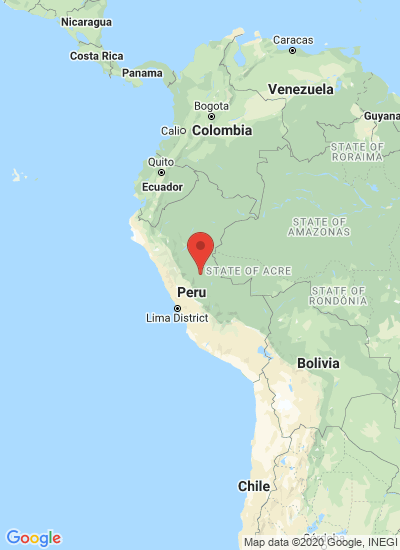
Experiments more than ten years ago at the Center’s highland station at Huancayo, Peru first flagged the potential for rare wild species, reporting evidence of resistance to late blight in 7 species endemic to the South American center of origin of potatoes.
“Wild potatoes are important because their full genetic potential is as yet untapped for agriculture,” says Meredith Bonierbale, Head of CIP’s Germplasm Enhancement and Crop Improvement Division. “Many genes conferring resistance to today’s major pests were left behind in the processes of domestication and crop improvement.”
But the fungus like pathogen Phytopthora infestans that causes the disease late blight mutates continuously. As CIP plant pathologist Willmer Perez, another co-author of the study, explains breeding for resistance is an ongoing venture: “Many cultivated varieties that previously showed resistance no longer do,” says Perez. “It’s not that those varieties are bad, it’s just that the pathogen also fights to adopt and survive, it struggles to maintain itself.”
Perez is one of a team of specialists who systematically look for new and different sources of resistance to late blight among the collections of wild germplasm in CIP’s genebank, which holds samples from 143 of the 187 documented wild potato species. Since 2008 they have worked on around 56 species that had not previously been studied.
“Right now we have several wild species under investigation. To date we’ve only tested about 40% of all the germplasm that we have in the genebank collection. That leaves 60% still untapped. We’ll continue to work with these species. They are in effect a kind of secret weapon. The improved varieties all have a known quantity of genes that Phytopthora has already come across one way or another. What we want is to surprise it with something as yet unknown to it.”
Meanwhile capturing the diversity of wild potatoes and transferring the traits to cultivated varieties remains a complex and lengthy endeavor. CIP breeders Mathilde Orrillo and colleagues are working to adapt and routinely apply in vitro technologies such as embryo rescue to facilitate the process of crossing wild potatoes with cultivated varieties.
Wild potatoes also offer a rich source of resistance to other diseases and abiotic stresses, such as drought and salinity. The potential is vast. But with the FAO forecasting that the area where they grow may be reduced by as much as 70% due to climate change, it is imperative that these genetic gems are preserved and investigated now.
In the 1840s, late blight disease devastated potato crops in Ireland. A million people died of hunger and another million emigrated to escape the famine. We never know what the next problem threatening our food supply and security is going to be. What we do know is that part of the answer may come in something the size of a pea.
For More information: https://onlinelibrary.wiley.com/doi/10.1111/j.1364-3703.2010.00622.x/abstract
Wild potatoes’ genes enlisted in the late blight arms race
Like to receive news like this by email? Join and Subscribe!
Get the latest potato industry news straight to your WhatsApp. Join the PotatoPro WhatsApp Community!
Highlighted Company

Related News

October 06, 2026
Dutch Potato Organisation Celebrated Potato Tuesday at Utrecht Central Station on October 6
The Dutch Potato Organisation celebrated Potato Tuesday on October 6 at Utrecht Central Station during the Week of Our Food. Visitors can enjoy free recipe booklets and discover the people behind the Dutch potato industry.

October 05, 2026
Punjab Agricultural University Introduces Four Potato Varieties for Higher Yield and Disease Resistance
PAU Ludhiana has released four potato varieties—PP-101, PP-102, PP-103 and PP-104. Yields range from 142–184 quintals/acre, with PP-103 offering early harvest and PP-104 moderate late-blight resistance. Seed is now available.

October 05, 2026
Idaho Potato Harvest Shows Solid Quality but Lower Yields in 2026
Idaho’s 2026 potato harvest is showing solid quality but lower yields, with frost, heat, warm nights and wildfire smoke affecting production. Planted area fell to 298,915 acres as growers report smaller crops.